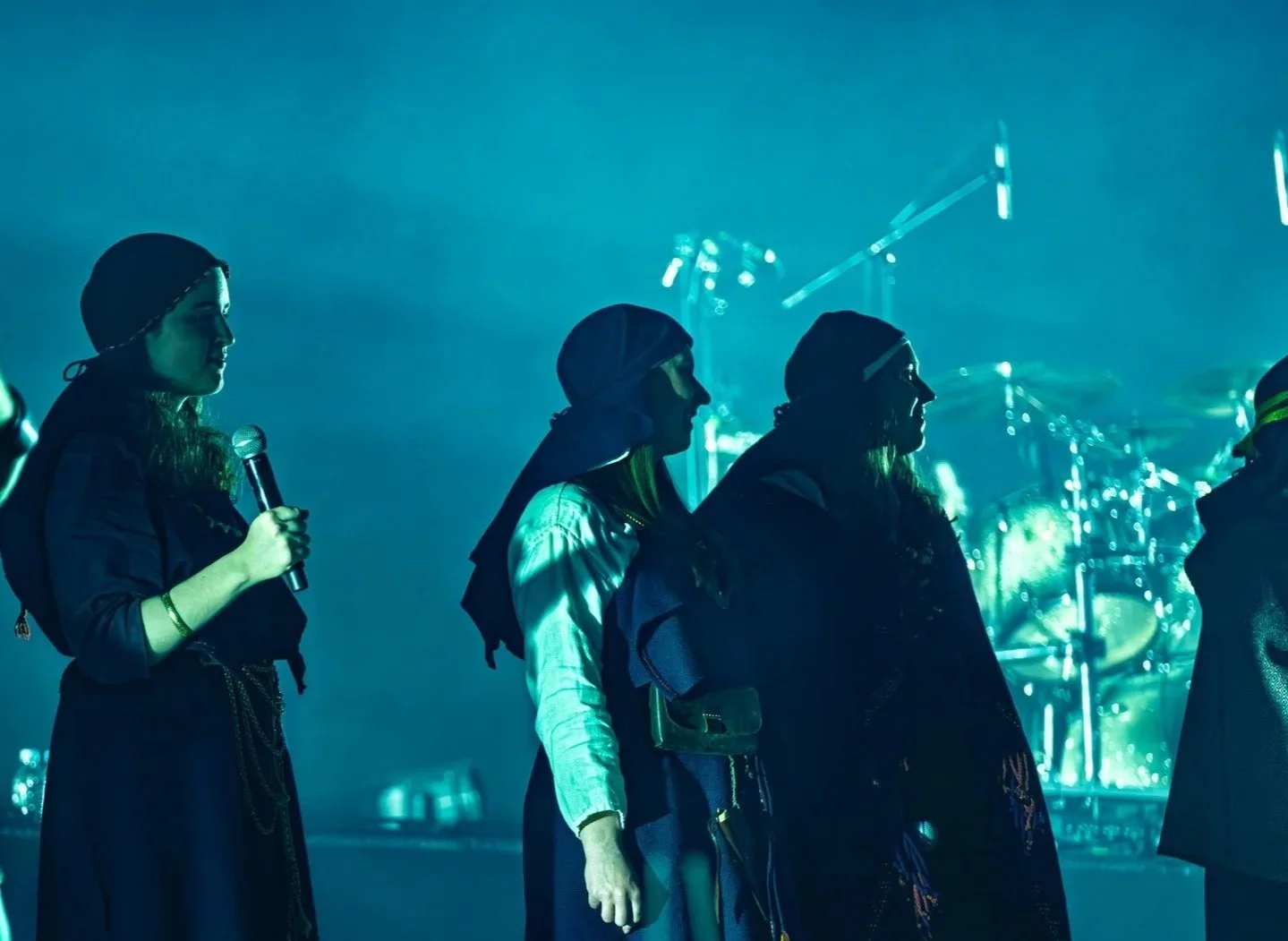
about me:
Biography:
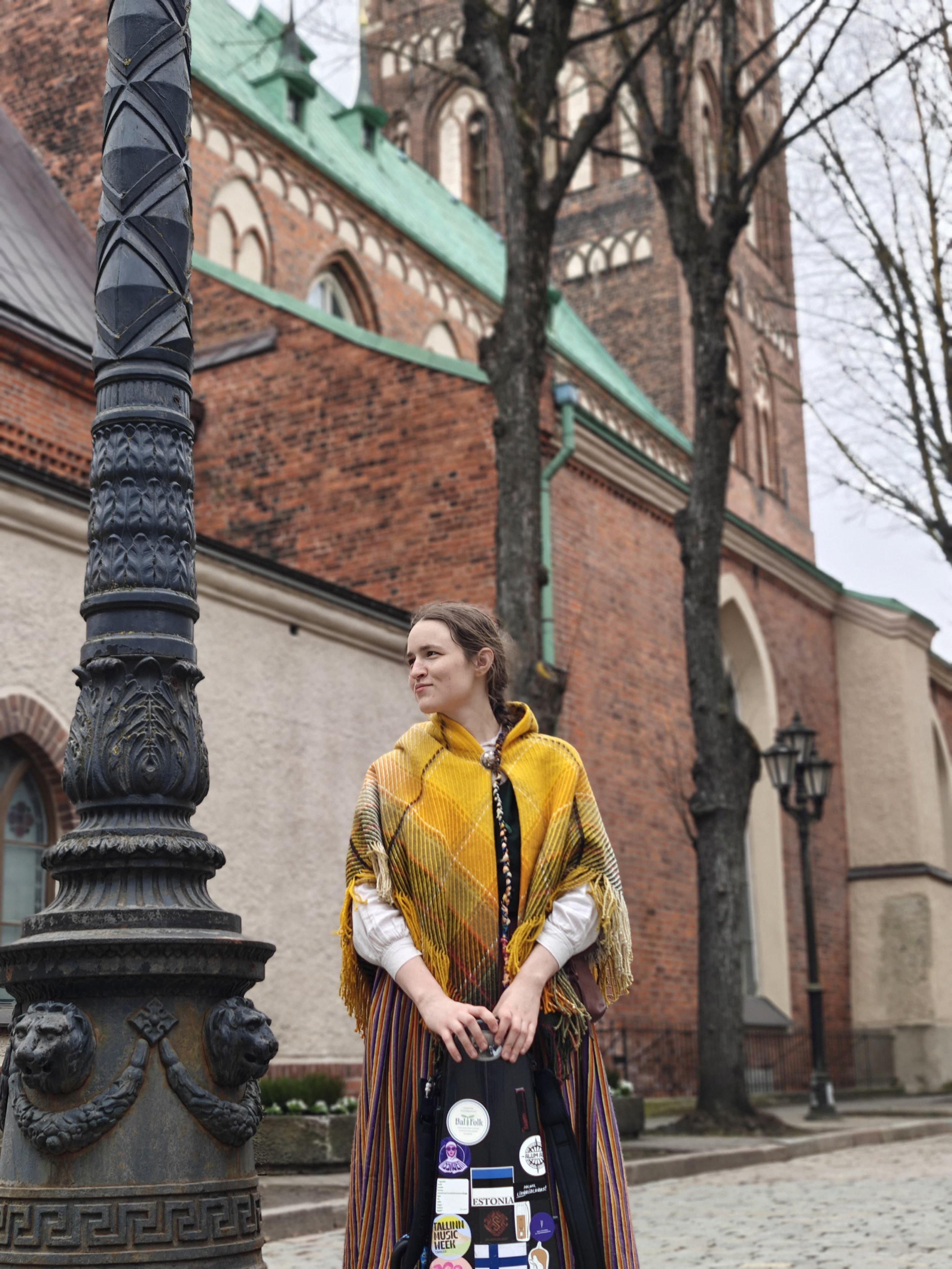
Katherine Emily (Katja) Rumin (b.2002) is a Tallinn-based performer, composer, and artistic researcher. Combining strong roots in Western classical training with a growing knowledge of the authentic traditions of her roots and their neighbours and an outward-looking lens for new spaces and approaches, her work searches for the spaces between tradition(s) and dialogues between them and interdisciplinary creativity. Born in Princeton, NJ (US) and raised between northeast US and southeast Canada in a family with fully East Slavic/USSR refugee origins, she started her music studies at a young age as a choral singer and pianist, taking up viola a few years later, now her main instrument in the academic music field. An additional strong background in theatre from youth continues to strongly inform who she is as an artist today.
Now she deepens her knowledge of ethnographic tradition in the traditional music department of Estonian Academy of Music and Theatre (EE), specialising in traditional singing - working towards a second BMus, in the frames of which she recently presented her artistic research at ”Young Voices” conference at University of Tartu (EE). She received her BMus in Viola from the Royal Welsh College of Music and Drama (UK), having also studied at Oberlin Conservatory (US) and New England Conservatory Preparatory Division (US), on scholarship from all three institutions and from Oberlin a recipient of the Flint Initiative Grant. Throughout her degree, she studied composition as a secondary study. Some main mentors include Dorothea Vogel, Kirsten Docter, Martha Strongin-Katz, Jihyun Kim, and Marcelo Politano. She additionally has participated in many noted masterclasses and courses throughout North America and Europe.
Her interests are wide within academic music, from early to contemporary music. Orchestrally she has performed in such groups as Estonian Baroque Orchestra, Ensemble Alekton (EE), and Berkshire Lyric at Seiji Ozawa Hall, Tanglewood (US), led the viola section in RWCMD symphony, and was a frequent member of RWCMD String Soloists. She is equally at home in chamber music as well as traditional music groups, from fully authentic to more arranged settings - several albums with various traditional projects are set to be released in the near future, and with equal enthusiasm has taken part in jazz and free improvisation projects.
She has shared the stage with artists and groups such as Henning Kraggerud, Andrew Lawrence-King, Fenella Humphreys, Limmie Pulliam, Pieter Wispelwey, and Skyforger. As a composer, her work was recently performed at EMTA’s COMMUTE and Müriaad festivals, by members of Ensemble for New Music Tallinn, and in Pitt Rivers Museum (UK) as part of Cities in Memory’s A Century of Sounds project. She is now working on the score for an upcoming film by animator Lizete Upīte.
She is grateful to the Willem Willeke Scholarship of South Mountain Foundation in support of her classical bachelor’s studies. Her classical instrument, made in 1995 by Gabrielle Kundert, was the final gift to her by her late great-aunt Nadežda Konstantinovna Rumine.
Additionally to viola, ethno/choral; singing, composing, and doubling work on violin and baroque violin/viola, Katja also plays 12-string ethnographic kokle (aka gusli, kannel, etc - Northeast European psaltery variant), Estonian bagpipe, and talharpa.
—
View document of artistic CV here: